Overview
At a glance
Is this game right for my group?
ABG editorial scores on a 1–5 scale.
Harder to teach
High replayability
Highly interactive
Scales well
Deep strategy
How it plays
How does it play?
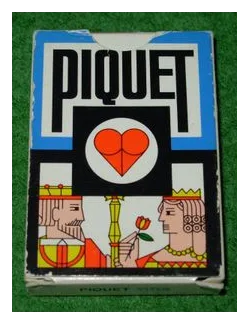
Piquet is a very old trick-taking card game for 2 players, reportedly invented by a M. Piquet during the Court of Charles II.
Core mechanisms
Key systems that shape the decisions players make.
Read the full game description
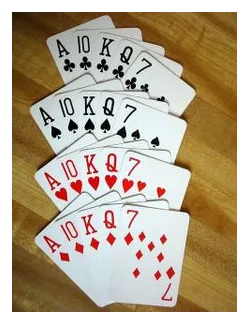
Piquet is a very old trick-taking card game for 2 players, reportedly invented by a M. Piquet during the Court of Charles II. It was well established in a form very similar to that used today in 1650 and remained the most popular game in France for many centuries, similar to Cribbage in the UK. A 32-card deck ranking from ace to seven in the four suits is used (known universally as a "Piquet Deck"). A game consists either of 6 deals called a partie (in the Rubicon version) or to 100 points in the "Cents" version. Each player is dealt 12 cards, with 8 left as a talon. Play consists of three distinct stages: (1) the exchange, (2) the declarations, and (3) trick play. Winning requires skill at all three. In the exchange phase, players may exchange one to five cards with the talon to improve their hand. Each player's discards are visible to them for the remainder of the game. The declaration phase involves revealing melds for points (done in a formalized manner so as to reveal some but not all of one's cards). Declarable combinations include: the most cards of one suit; the longest run in a suit; and sets of the same rank, e.g. 3 kings, 4 aces. The trick phase involves playing out the hand, with no trump. Bonuses include taking most tricks, taking all the tricks, and scoring 30 points before the opponent declares. The small deck combined with the large hands combined with the revealing of each other's cards gives Piquet play a different feel than many card games, somewhat more akin to a board game. Part of the strategy of piquet is about controlling information: skillful players carefully determine what they will exchange and declare in order to keep secrets for another phase of the game, at the cost of points in another phase.