Overview
At a glance
Is this game right for my group?
ABG editorial scores on a 1–5 scale.
Harder to teach
High replayability
Highly interactive
Player-count sensitive
Deep strategy
More strategic control
How it plays
How does it play?
Turn every card into a task, helper, material, sale, or finished work in Carl Chudyk’s tightly interlocked temple economy.
Core mechanisms
Key systems that shape the decisions players make.
Hand Management
Time and sequence a limited hand of cards to preserve future options.
Multi-Use Cards
Use the same card in different ways, making each play a trade-off.
Set Collection
Gather related items that become more valuable when scored together.
Follow
Choose whether to perform a reduced version of another player’s selected action.
Variable Phase Order
The order of phases changes according to player choices or game state.
Team-Based Game
Players compete in fixed teams and coordinate toward a shared team result.
Read the full game description
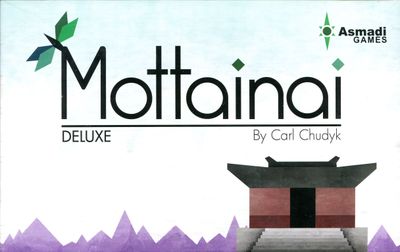
Mottainai is a compact multi-use card game in which monks turn humble materials into valuable works. Every card can serve as a task, a helper, a material, a sale, or a completed work with a persistent ability. At the start of a turn you choose a task such as Clerk, Monk, Tailor, Potter, or Smith; opponents may follow that task with matching helpers before you perform it with greater efficiency. Cards flow through the craft floor into materials and then into works, while sales create sets that score through backorders. Finished works bend the rules and combine into intricate engines, making the order of actions as important as the cards themselves. A round can end when a player completes enough works or empties the deck, so the shared follow system constantly rewards timing and reading opponents. Derived from Glory to Rome but rebuilt around a smaller deck and sharper structures, Mottainai offers unusually deep play in fifteen to thirty minutes.