Table feel
Katarenga has a high level of direct confrontation and strategic depth in confrontation. Players need to be aware of and react to each other's strategies frequently. However, the game does not emphasize cooperation as much.
Your objective in Katarenga is to get two of your figures past the opposing baseline. That may sound easy — but your opponent is flexible and dangerous. The abilities of the playing figures change from one move to the next. Only if you realize the advantages of the division of fo...
Players
2
Time
?-?
Age
8+
Weight
2.29
Rating
7.38
Should this hit the table?
Katarenga has a high level of direct confrontation and strategic depth in confrontation. Players need to be aware of and react to each other's strategies frequently. However, the game does not emphasize cooperation as much.
Teaching signal
High replayability
Highly interactive
Scales well
Deep strategy
More strategic control
Katarenga has a high level of direct confrontation and strategic depth in confrontation. Players need to be aware of and react to each other's strategies frequently. However, the game does not emphasize cooperation as much.
Katarenga offers a high level of variability in each playthrough with its gameboard, multiple paths to victory, and variable setups. The presence of expansions adds new content and gameplay elements, further enhancing the replay value. The game provides deep strategic possibilities and allows players to improve their tactics and strategies over time. The player interaction score is average, and the game scales well with different numbers of players. While it may take some time to learn, the easiness to learn score is moderate. Overall, Katarenga has a strong replayability score of 8.0.
Katarenga has a moderate level of luck involved in the game. Random elements have a notable but not exclusive impact on the game outcome. However, players have substantial ability to mitigate randomness through strategic decisions and planning. The game outcome is primarily determined by player strategy and decisions, with luck playing a minor role.
Overview
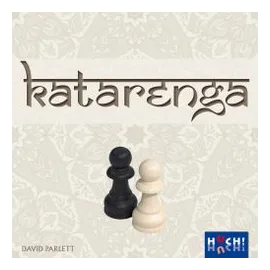
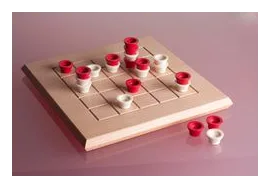
Your objective in Katarenga is to get two of your figures past the opposing baseline. That may sound easy — but your opponent is flexible and dangerous. The abilities of the playing figures change from one move to the next. Only if you realize the advantages of the division of four possible actions, make clever use of the different strengths, and plan ahead can you outsmart your opponent through tactical play and thus win the game. Description from the designer: Katarenga is a two-player abstract consisting of a variable board, 16 pawns, and rules of movement derived from Chess. Each pawn’s move is governed by the colour of the square it moves away from (red = rook, yellow = bishop, green = knight, blue = king). For each game the board is constructed from four double-sided quarterboards, each of which can be placed either way up and any way round, yielding a total of over 24,000 different 8x8 boards. In the basic game your aim is to get two of your pawns to the opposite side without being captured. The same equipment can be used for playing a variety of other games with the same rules of movement and capture. Can you invent more?
Media
Images, galleries, and videos are grouped here so the page feels visual before every asset is fully hosted.
Editions
| Edition | Year | Language | Publisher / Region |
|---|---|---|---|
| No editions imported yet. | |||
Files and documents
No files imported yet.
Commerce mapping
No commerce mappings imported yet.
Credits
Linked items
Related games and expansions help build a connected catalog around every title.
No linked items imported yet.