Overview
At a glance
Is this game right for my group?
ABG editorial scores on a 1–5 scale.
Harder to teach
High replayability
Highly interactive
Scales well
Deep strategy
How it plays
How does it play?
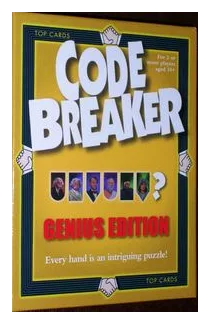
A fairly simple and quick deduction game. Cards come in three types; Artists, Thinkers and Leaders, each with a picture and short biography of an appropriate historical character, and in two colors, red if born before 1700 and yellow if afterwards.
Core mechanisms
Key systems that shape the decisions players make.
Read the full game description
A fairly simple and quick deduction game. Cards come in three types; Artists, Thinkers and Leaders, each with a picture and short biography of an appropriate historical character, and in two colors, red if born before 1700 and yellow if afterwards. The Code Master chooses a pattern for cards to be laid down in incorporating color, type or both, either from the Code cards supplied or by inventing his own. Players, including the Code Master, then take it in turns to play cards from their hands and are told whether the cards are correct or not. If a player deduces the pattern before running out of cards he scores; otherwise the Code Master scores. Based, according to the rule leaflet, on a game by the same author called Eleusis published in 1963.