Overview
At a glance
Is this game right for my group?
ABG editorial scores on a 1–5 scale.
Harder to teach
High replayability
Highly interactive
Scales well
Deep strategy
More strategic control
How it plays
How does it play?
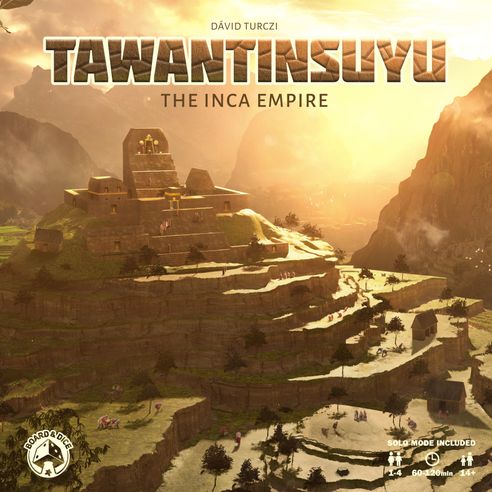
Deploy specialized workers on Cusco’s terraced hill, chain adjacent actions, guide your High Priest around the Coricancha, and build an Inca engine of faith, production, and conquest.
Core mechanisms
Key systems that shape the decisions players make.
Action Points
Spend a limited allowance of points across several possible actions each turn.
Rondel
Move around a circular action track that limits which actions are currently reachable.
Area Majority
Compete to have the strongest presence in areas that award control or points.
Hand Management
Time and sequence a limited hand of cards to preserve future options.
Open Drafting
Select cards or items from a shared face-up display.
Pattern Building
Place elements to create arrangements that satisfy scoring or action patterns.
Read the full game description
Tawantinsuyu: The Inca Empire is a demanding action-selection game built around a triangular hill rising toward the Coricancha. Your village supplies five kinds of workers, and placing one beside an action space can trigger both that space and connected actions where matching workers already stand. Position is never merely spatial: the spoke favored by your High Priest changes placement costs, god cards can pay for workers or unleash powers through statues, and permanent workers reshape the action network for everyone. Instead of placing, you may recruit, seek a god or army card, or move the priest around the rondel to produce, worship, make offerings, conquer, or refresh. Buildings generate resources and abilities, armies compete across four regions, and temple advances, stairs, statues, conquest, and remaining wealth all feed final scoring. The result is an intricate efficiency puzzle where one carefully prepared placement can ripple through several systems.