Table feel
High level of direct and strategic confrontation with frequent interaction, but limited emphasis on cooperation.
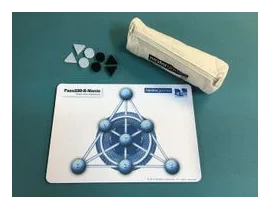
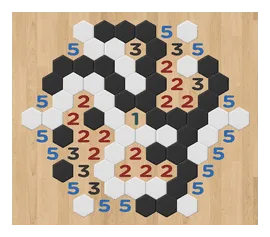
Strands is a hard-to-master 2-player puzzle game with rules that fit in two tweets: 1. To start, Black covers any space marked “2”. 2. From then on, starting with White, the players take turns. On your turn, cover up to X empty spaces marked “X”. For example, you could cover any...
Players
2
Time
15-30
Age
4+
Weight
2.33
Rating
6.56
Should this hit the table?
High level of direct and strategic confrontation with frequent interaction, but limited emphasis on cooperation.
Teaching signal
High replayability
Highly interactive
Scales well
Deep strategy
More strategic control
High level of direct and strategic confrontation with frequent interaction, but limited emphasis on cooperation.
Strands has a high replayability score due to its high variability gameboard, impactful expansions, deep strategic possibilities, and adaptability to different player counts. The game offers fresh experiences each time it is played, allowing players to discover new tactics and strategies. The presence of expansions adds new content and gameplay elements, further enhancing the replay value. While the game may take some time to learn, it offers a good balance between easiness and depth, making it accessible to a wide range of players.
Strands has a moderate level of randomness impact, with random elements playing a notable but not exclusive role in determining the game outcome. However, players have substantial ability to mitigate the effects of luck through strategic decisions and planning. The game relies on a balanced mix of luck and strategy, with player decisions and strategy primarily determining the game outcome. Overall, Strands has a moderate level of luck dependence.
Overview
Strands is a hard-to-master 2-player puzzle game with rules that fit in two tweets: 1. To start, Black covers any space marked “2”. 2. From then on, starting with White, the players take turns. On your turn, cover up to X empty spaces marked “X”. For example, you could cover any 3 empty spaces marked “3”. 3. The game ends when the board’s full. The player with largest contiguous group of stones wins. If tied, compare the players’ second-largest groups, and so on, until you come to a pair which aren’t the same size. Whoever owns the larger wins The numbers on the board make the game's interface clear and intuitive, and they balance the value of the board's spaces. The board's center is the most powerful place to put pieces, but you can place more pieces per turn near the edge. You must navigate this tradeoff to win. Read the Strands Strategy Primer here. Read the Strands page at the designer's site here here.

Media
Images, galleries, and videos are grouped here so the page feels visual before every asset is fully hosted.
No media imported yet.
Editions
| Edition | Year | Language | Publisher / Region |
|---|---|---|---|
| No editions imported yet. | |||
Files and documents
No files imported yet.
Commerce mapping
No commerce mappings imported yet.
Credits
Linked items
Related games and expansions help build a connected catalog around every title.
No linked items imported yet.