Overview
At a glance
Is this game right for my group?
ABG editorial scores on a 1–5 scale.
Harder to teach
High replayability
Highly interactive
Scales well
Deep strategy
How it plays
How does it play?
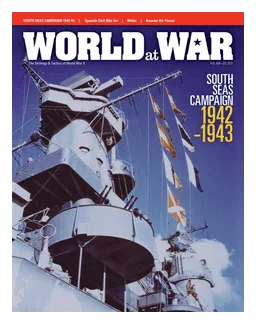
The South Seas Campaign, 1942-43, designed by Joseph Miranda, is a two player, strategic-level wargame of intermediate complexity that covers the struggle for control of the naval, air and land lines of communication between Australia and the US during those two years.
Core mechanisms
Key systems that shape the decisions players make.
Read the full game description
The South Seas Campaign, 1942-43, designed by Joseph Miranda, is a two player, strategic-level wargame of intermediate complexity that covers the struggle for control of the naval, air and land lines of communication between Australia and the US during those two years. Most ground units in the game represent divisions, brigades or regiments. Aircraft units represent two groups or air regiments (six to eight squadrons). Ship units mostly represent one fleet aircraft carrier, 'divisions' of two light or escort carriers, two battleships, four cruisers, squadrons of six to eight destroyers (plus Japanese light cruiser destroyer leaders), and various numbers of other ship types. On the area map, each inch equals 90 miles. Each turn represents from two weeks to two months, depending on the tempo of action at any given time. Special rules cover such things as: random events, reinforcements, withdrawals, refits, fog of war, off-map bases, interceptions, invading Australia, long-range bombers, protected targets, shore bombardment, commandos, airborne units, seaplanes, and the Tokyo Express. The game uses the system originally created for our earlier-published game, Red Dragon Rising. The turn sequence is as follows. Originally published in World at War magazine #18 (Jun-Jul 2011). I. Japanese Random Event Check II. Japanese Random Event Resolution III. Japanese Action IV. Allied Random Event Check V. Allied Random Event Resolution VI. Allied Action VII. Turn Record Phase