ABG All Board Games
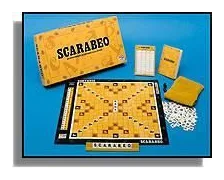
Scarabeo box art
Rich game profile

Scarabeo

In this classic Italian word game, players use their eight drawn letter-tiles to form words on the gameboard. Each word laid out earns points based on the commonality of the letters used, with certain board spaces giving bonuses. But a word can only be played if it uses at least...

Players

2-4

Time

?-?

Age

8+

Weight

2.04

Rating

6.35

Should this hit the table?

Quick read before the metadata.

Scarabeo has a moderate level of direct confrontation and strategic depth. Players need to pay attention to each other's moves frequently. However, there is not much emphasis on cooperation in the game.

Teach 2.3

Teaching signal

Replay 4.0

High replayability

Interaction 3.7

Highly interactive

Scaling 4.0

Scales well

Strategy 4.5

Deep strategy

Control 3.5

More strategic control

Table feel

Scarabeo has a moderate level of direct confrontation and strategic depth. Players need to pay attention to each other's moves frequently. However, there is not much emphasis on cooperation in the game.

Replay value

Scarabeo has a high variability gameboard, allowing for different experiences each time it is played. The presence of expansions adds to the replay value, and there is deep strategic depth for players to explore. The game scales well with different numbers of players and has moderate ease of learning. Overall, Scarabeo has a strong replayability score of 7.9.

Luck profile

Scarabeo has a moderate level of luck involved in the game. While random elements like tile draws and letter distributions can impact the outcome, players have a significant ability to mitigate luck through strategic decisions and planning. The game relies on a balanced mix of luck and strategy, with player decisions playing a major role in determining the outcome. Overall, Scarabeo offers a good balance between luck and player agency.

Overview

What ABG knows about this game

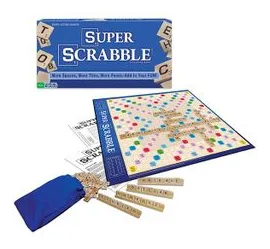
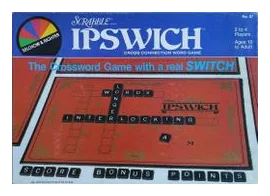
In this classic Italian word game, players use their eight drawn letter-tiles to form words on the gameboard. Each word laid out earns points based on the commonality of the letters used, with certain board spaces giving bonuses. But a word can only be played if it uses at least one already-played tile. This leads to slightly tactical play, as potential words are rejected because they would give an opponent too much access to the better bonus spaces. Aldo Pasetti self-produced the game and was sued by the publisher of Scrabble, that has very, very similar board, tiles and rules. The trial took place in the late '50s and ended with a verdict of acquittal on the basis that game mechanics are not relevant and no confusion can be made between a long name as "Scarabeo" and a short one as "Scrabble", so it is not even unfair competition. Editrice Giochi had waited for the definitive acquittal: after that, it published the game.
Media

Images and visual references

Images, galleries, and videos are grouped here so the page feels visual before every asset is fully hosted.

Editions

Versions and regional releases

Edition Year Language Publisher / Region
No editions imported yet.

Files and documents

Rules, aids, translations

No files imported yet.

Commerce mapping

Buying signals

No commerce mappings imported yet.

Credits

People and publishers

Linked items

Graph expansion queue

Related games and expansions help build a connected catalog around every title.

No linked items imported yet.