Overview
At a glance
Is this game right for my group?
ABG editorial scores on a 1–5 scale.
Harder to teach
High replayability
Highly interactive
Scales well
Deep strategy
How it plays
How does it play?
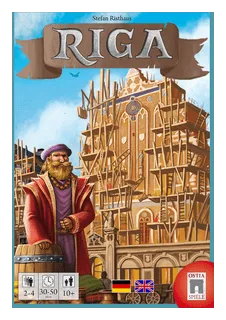
Take and trade commodities in the Baltic Sea to acquire more power than your opponents in the main cities of the 13th century! At the beginning of each round in Riga, commodity cards are randomly grouped into packages with a minimum base value.
Core mechanisms
Key systems that shape the decisions players make.
Read the full game description
Take and trade commodities in the Baltic Sea to acquire more power than your opponents in the main cities of the 13th century! At the beginning of each round in Riga, commodity cards are randomly grouped into packages with a minimum base value. Their values vary from 2 to 5. Buildings (cards) are placed on the table, too. Each player takes two turns per round, the first in clockwise order, the second one counterclockwise. Your turn starts with choosing a group of commodity cards OR one building from the display in the middle of the table. Then you may build up to three buildings from your hand. To build, you must pay the costs by discarding your commodities. Depending on where you build (with the color of the building indicating the city), your commodities have a different value. Usually the commodity has a base value, but in every city, one commodity is not wanted at all and another one is more expensive. In Gdansk, for example, you cannot pay with grain, but glass has a value +2. The buildings show victory points and persons. They also have different features to help you get more commodities, create more victory points, or build more easily by giving money per merchant on your cards. Riga continues the series of small games from Ostia in the Baltic Sea following Visby and Tallinn.