Overview
At a glance
Is this game right for my group?
ABG editorial scores on a 1–5 scale.
Harder to teach
High replayability
Highly interactive
Scales well
Deep strategy
How it plays
How does it play?
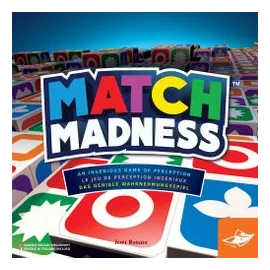
A square-shaped board with 13 slits (axes) crossing it is placed in the center of the table. A square-shaped card is drawn from a deck and placed onto the board.
Core mechanisms
Key systems that shape the decisions players make.
Read the full game description
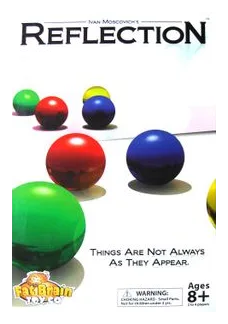
A square-shaped board with 13 slits (axes) crossing it is placed in the center of the table. A square-shaped card is drawn from a deck and placed onto the board. The card covers the entire board except for the ends of the axes, leaving room for a mirror to be inserted into the axes perpendicular to and on top of the card. The card displays several spheres that are red, green, yellow, or blue. Players race to choose which of the 13 axes they think the mirror should be inserted into so as to produce the most points when all the reflected and actual spheres are counted. A player cannot choose an axis that another player has chosen. Once all the players have made a selection, the mirror is inserted in turn into each chosen axis. The player who chose a particular axis decides which direction the mirror should face when inserted into that axis. The axis scores for the player who chose it. Each green sphere adds a point, and each yellow sphere subtracts a point. The player also adds points equal to the difference between the number of red and blue spheres. Play continues with a new card. The game ends when one player reaches an agreed-upon point total.