Overview
At a glance
Is this game right for my group?
ABG editorial scores on a 1–5 scale.
Harder to teach
High replayability
Low interaction
Scales well
Deep strategy
More strategic control
How it plays
How does it play?
Combine two asymmetric tribes, reclaim a modular world, and turn remembered keycards, gadgets, followers, and ancient structures into a new civilization.
Core mechanisms
Key systems that shape the decisions players make.
Action Retrieval
Previously used actions must be recovered before they can be selected again.
Map Addition
Expand the playable map by adding new tiles, regions, or spaces.
Modular Board
Build the play area from interchangeable sections that vary between games.
Income
Receive recurring resources according to your position, assets, or development.
End Game Bonuses
Earn additional points for meeting conditions evaluated when the game ends.
Read the full game description
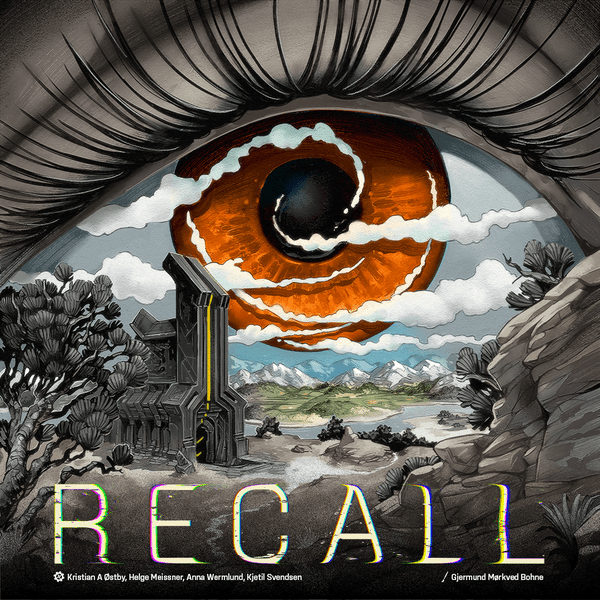
Recall is a one-to-four-player strategy game set generations after the world of Revive. Each player combines two of fourteen tribes, creating a highly asymmetric faction with a distinct board, abilities, and path to efficiency. A turn begins by using a keycard in an action slot. Cards recruit followers, move across the modular map, reveal new tiles, build structures, develop the faction board, open ancient crates, and advance knowledge tracks. Used cards move through a personal recall cycle, so powerful actions cannot simply be repeated without planning how and when they will return. Gadgets and development tiles create permanent improvements; crystalline resources and follower placement connect the private engine to competition on the shared world. Players establish routes, reach valuable locations, construct monuments, and pursue scoring opportunities exposed during exploration. The combination of paired tribes, variable map, ancient loot, and development choices makes every faction grow differently even when opponents pursue similar goals. The game lasts a fixed number of rounds and ends with points from the board, tribe objectives, knowledge, structures, collected advances, and other developed systems. A dedicated solo mode preserves the same central action-retrieval puzzle for one player.