Table feel
Moderate level of interaction with a good balance between direct and strategic confrontation. Players need to pay attention to each other's strategies and turns frequently, but there is less emphasis on cooperation.
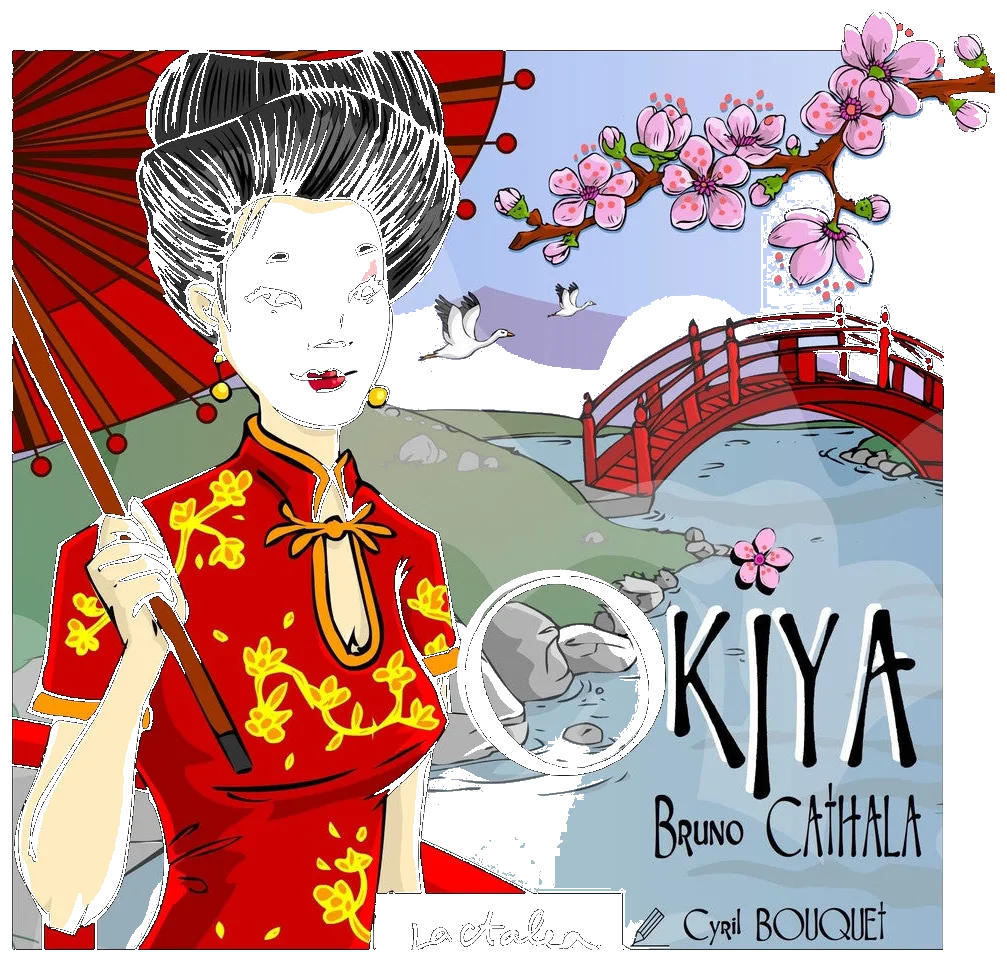
In Okiya, a.k.a. Niya,, each player tries to arrange her tokens to gain the favor of the emperor. Alternatively, you can prevent your rival from placing a token in the Imperial garden, showing that you have more control than your opponent. To set up the game, shuffle the 16 tiles...
Players
2
Time
?-?
Age
7+
Weight
1.22
Rating
6.55
Should this hit the table?
Moderate level of interaction with a good balance between direct and strategic confrontation. Players need to pay attention to each other's strategies and turns frequently, but there is less emphasis on cooperation.
Teaching signal
High replayability
Highly interactive
Scales well
Deep strategy
More strategic control
Moderate level of interaction with a good balance between direct and strategic confrontation. Players need to pay attention to each other's strategies and turns frequently, but there is less emphasis on cooperation.
Okiya offers a high level of variability with its gameboard, allowing for different experiences each time it is played. The presence of expansions adds additional content and gameplay elements, enhancing the replay value. The game also provides deep strategic possibilities and room for players to improve their tactics over time. The player interaction score is average, and the game scales well with different numbers of players. While it may take some time to learn, the depth it offers makes it worth the effort. Overall, Okiya has a strong replayability score of 8.0.
Okiya has a moderate level of luck involved in the game. While random elements like card draws and tile placements can have an impact on the game outcome, players have a significant ability to mitigate the effects of luck through strategic decisions and planning. The game relies on a balanced mix of luck and strategy, with player decisions playing a major role in determining the outcome. Overall, Okiya offers a good balance between luck and player agency.
Overview
In Okiya, a.k.a. Niya,, each player tries to arrange her tokens to gain the favor of the emperor. Alternatively, you can prevent your rival from placing a token in the Imperial garden, showing that you have more control than your opponent. To set up the game, shuffle the 16 tiles and arrange them in a 4x4 square; each tile shows one of four types of vegetation (maple, cherry, pine or iris) and one of four types of poetic symbols (rising sun, bird, rain or tanzaku - the small pieces of paper on which people sometimes write wishes). The starting player removes one tile on the border of the square, sets this tile aside, then places one of her tokens in this space. The opponent must then do the same thing, but can choose from only those tiles that depict the same type of vegetation or poetic symbol shown on the tile first set aside. Play continues, with each set-aside tile determining where the next player can go until: A player forms a line with four of her tokens in any direction, A player forms a 2x2 square with four of her tokens, or A player chooses a tile which doesn't allow her opponent to place a token. In any of these cases, the player has won the game. A match can be a single game, a "best of three" series, or a point-based match, with the winner of a game earning as many points as the number of tiles remaining in the grid when she wins; in this case, the player who first collects ten points wins the match.

Media
Images, galleries, and videos are grouped here so the page feels visual before every asset is fully hosted.
Editions
| Edition | Year | Language | Publisher / Region |
|---|---|---|---|
| No editions imported yet. | |||
Files and documents
No files imported yet.
Commerce mapping
No commerce mappings imported yet.
Credits
Linked items
Related games and expansions help build a connected catalog around every title.
No linked items imported yet.