Overview
At a glance
Is this game right for my group?
ABG editorial scores on a 1–5 scale.
Harder to teach
High replayability
Highly interactive
Scales well
Deep strategy
How it plays
How does it play?
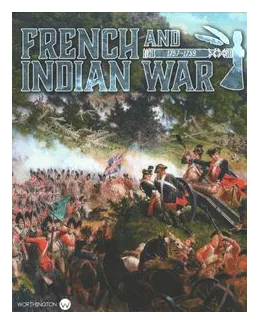
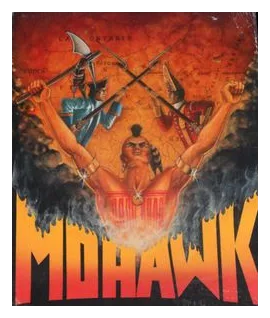
"Mohawk" is a wargame of the "French and Indian War" in North America. Mounted, color mapboard measures 22" x 17".
Core mechanisms
Key systems that shape the decisions players make.
Movement Points
Spend a movement allowance across spaces with different costs.
Dice Rolling
Roll dice to introduce uncertainty into actions, production, movement, or resolution.
Minimap Resolution
Resolve broader movement or conflict on a smaller linked representation of the map.
Point-to-Point Movement
Move along explicit connections between named locations or nodes.
Simulation
Model a real or imagined system through detailed cause-and-effect rules.
Variable Set-up
Starting conditions, resources, or layouts change between plays.
Read the full game description
"Mohawk" is a wargame of the "French and Indian War" in North America. Mounted, color mapboard measures 22" x 17". Map features significant land and water routes used in the period. Inset maps are included for high seas naval movement and tactical battle resolution. 176 two-sided mounted and die-cut counters represent regular and militia, Indians, fortresses and fleets. Reinforcements from Europe are variable depending on naval activity. Militia must be "mustered," and "go home" at the end of each campaign year. Natives are influenced by "gifts and supplies" and by battlefield victories. Road, Indian trail and Water movement all have key roles in operations. Battles occur between opposing forces occupying the same point. Engagements take place on an inset map determined by terrain and situation: "Attacking/Defending Fort," "Open Ground," "Wood" (forested) or "Landing." Modifiers apply depending on whether engaged units are Regulars, Militia, or Indians, Rangers and Couriers de Bois. Units engaging in battle line up opposite one another. A "hit" is determined by a D6 roll of "6." Die rolls are modified according to unit type and battle setting (Regulars defending a fort, for example, are "plus 2", hitting on a four or better). All units, except Iroquois, are flipped on the first hit and eliminated on the second. At the start of his/her battle turn, a player may elect to "retreat" in lieu of firing. Retreating units move to an adjacent friendly point, preferably toward their Base of Operations. At the end of a victorious battle, flipped pieces are turned back to full strength, and one victorious militia unit, if present, may be "promonted" to a Regular or Ranger (British) or a "Troop of the Marine battalion" or "Courier de Bois" (French). Fortresses can be built; Towns and Fortresses can be burned. Supply is critical at the end of a campaign year; all Regular and militia units must occupy either a town or fort, or is not connected by a red road (not trail). They must be able to trace supply by road or waterway to their Base of Operations (Montreal or Quebec for the French; Boston, New York or Philadelphia for the British). Regular or militia units which fail these conditions are eliminated unless they are in a seaport. The powerful Iroquois Nation is key to victory. Three of the six Iroquois tribes begin aligned with each side (the counters are two-sided). After each battle, the victor of that battle flips one Iroquois unit to his/her side. Any time a player begins his/her turn with all six tribes oriented to his/her side, the Iroquois have joined him/her for the duration. The other twenty tribes are activated to support the French either by the activities of the Couriers de Bois, or by French bribes ("gifts and supplies"). Except for the Iroquois, Native tribes usually "go home" after a victory (to celebrate). Victory is determined by conquest. The French must begin a turn, or end the game, holding Albany and one of New York, Boston or Philadelphia, or must deny the British their victory conditions. The British must hold a total of three French cities from the list of Louisbourg, Frontenac, Duquesne, Montreal or Quebec (at least one must be Montreal or Quebec).