ABG All Board Games
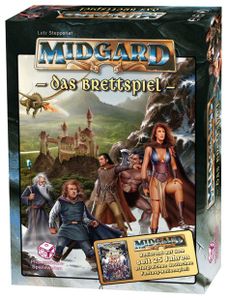
Midgard: Das Brettspiel box art

Midgard: Das Brettspiel

Players

3-5

Time

?-?

Age

12+

Weight

3.09

Rating

6.61

Fit

Teach 2.3

Teaching signal

Replay 3.9

High replayability

Interaction 3.7

Highly interactive

Scaling 4.0

Scales well

Strategy 4.5

Deep strategy

Control 3.0

Luck-sensitive

Table feel

Midgard: Das Brettspiel has a high level of direct confrontation and strategic depth in confrontation. Players need to frequently pay attention to and react to others' strategies and turns. However, the game does not emphasize cooperation as much. Overall, the game has a strong interaction score.

Replay value

Midgard: Das Brettspiel has a high replayability score due to its high variability gameboard, availability of expansions, deep strategic depth, and good scalability. The game offers different experiences each time it is played, with multiple paths to victory and variable setups. The expansions add new content and gameplay elements, enhancing the replay value. There is ample room for players to improve their strategy over time, discovering new tactics and strategies. The game adapts well to different player counts without compromising its appeal or balance. While it may take some time to learn, the depth it offers makes it worth the investment. Overall, Midgard: Das Brettspiel provides a fresh and engaging experience that will keep players coming back for more.

Luck profile

Midgard: Das Brettspiel has a moderate influence of luck. Random elements like dice rolls and card draws have a notable but not exclusive impact on the game outcome. Players have some ability to mitigate the effects of randomness through strategic decisions and planning. The game outcome is a balanced mix of luck and strategy, with neither element dominating. Overall, Midgard: Das Brettspiel provides a good balance between luck and player agency.
Overview

The game tries to recreate the Midgard role playing feeling in a boardgame. It addresses former Midgard RPG players, who don't find the time for role playing anymore, as well as fans of fantasy boardgames. As the complexity level is rather high and the game offers multiple options for players, Midgard is rather successful in achieving it's goal. The difficulty is still light to medium, despite dozens of cards that influence the game and the characters. The game is based on tiles (major cities of Midgard) players move across, collecting rare items and fulfilling adventures. Often this ends in the local city jail or in clashes with monsters. Additional threats like terror cards or riots pop up in cities during the game. Tests are made with a 20-sided die and the mechanics are just the same as in the Midgard RPG. Movement and actions are controlled by action cards from a four-card-hand which allows tactical gaming. Each action card has different abilities and some may even interrupt another player's turn. Players may form groups for the duration of a game turn to help each other solve adventures or make difficult tests. Sticking together earns each player of a group experience points and treasure cards. As only one player can finally win the game, forming groups is a two-edged sword as it helps your opponents too. The goal of the game is to get 3 treasure rewards, rise to character level 3 and find 2 artifacts first. If you deliver the treasures and artifacts to the correct city you have won the game. Included are pre-generated characters like Sorcerer or Warrior but players will be able to create their own characters in the final release version. This information is derived from the website of Phantastische-Spielewelten. http://www.phantastische-spielewelten.de

Editions

Edition Year Language Publisher / Region
No editions imported yet.

Files

No files imported yet.

Commerce

No commerce mappings imported yet.

Credits

Designers

1
Lutz Stepponat

Artists

2
Swen Papenbrock Lisa Wilkens

Publishers

1
Phantastische-Spielewelten

Linked items

No linked items imported yet.