Overview
At a glance
Is this game right for my group?
ABG editorial scores on a 1–5 scale.
Harder to teach
High replayability
Highly interactive
Scales well
Deep strategy
How it plays
How does it play?
World full of arrogance. A place where a Farmer can become the emperor, whereas Dwarf can be the highest.
Core mechanisms
Key systems that shape the decisions players make.
Read the full game description
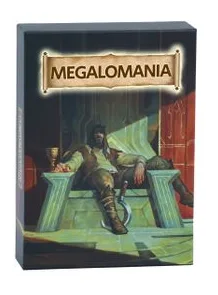
World full of arrogance. A place where a Farmer can become the emperor, whereas Dwarf can be the highest. Every path of the explorer is not viable. Knight’s shield will not protect you from the wizardry and you won't be able to say who is the real Oracle, as he might turn up disguised and the Assassin will appear suddenly, when you’re not expecting. Megalomania is a trick taking card game, played in 2 to 4 players (can be played in pairs). Players are trying to complete missions and gain points, with the help of the power crystals, cubes and scrolls. The winner of the game is the player with the highest points at the end of the game.