ABG All Board Games
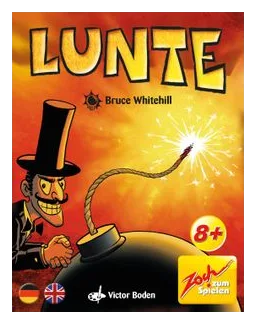
Lunte box art

Lunte

Players

3-6

Time

15-20

Age

8+

Weight

1

Rating

5.77

Fit

Teach 2.4

Teaching signal

Replay 3.9

High replayability

Interaction 3.7

Highly interactive

Scaling 4.0

Scales well

Strategy 4.5

Deep strategy

Control 2.3

Luck-sensitive

Table feel

Lunte has a high level of direct confrontation and strategic depth in confrontation. Players need to frequently pay attention to and react to each other's strategies and turns. However, there is less emphasis on cooperation in the game.

Replay value

Lunte has a high variability gameboard, with multiple paths to victory and random elements that provide fresh experiences each time. The availability of expansions adds new content and gameplay elements, enhancing replay value. The game offers deep strategic possibilities and room for players to improve their tactics and strategies. The player interaction score is average. Lunte scales well with different numbers of players without compromising its appeal or balance. It has a moderate easiness to learn, making it accessible to a wide range of players. Overall, Lunte has a strong replayability score of 7.7 out of 10.

Luck profile

Lunte has a moderate influence of luck. Random elements like dice rolls or card draws play a notable but not exclusive impact on the game outcome. While there is some room for players to influence or mitigate the effects of randomness through strategic decisions, luck still plays a significant role. The game has a balanced mix of luck and strategy, with the outcome being influenced by both luck and player decisions.

Overview

In Lunte, signed from a 2012/2013 game author's competition, the fuse is burning. Players take turns quickly adding more fuse cards to a continuously growing fuse until someone lets the bomb explode by playing one of his bomb cards, thereby earning him all of the fuse cards in play. He takes these cards, leaving only the starting match in play, then the fuse is lit once again. Each fuse card has a value, and playing the bomb cards too early doesn't bring many points; that said, waiting too long to score lets others play their defuse cards — which cuts the fuse back to the match and removes those fuse cards from the game — or jump in with a bomb card of their own (which nets them any defuse cards played since the previous bomb). You might want to hold on to high-valued fuse cards rather than let others snatch them up, but the game ends when all bombs have been played or the time bomb (inserted in the deck at the start of play) goes off. When that happens, everyone tallies their cards, then loses points for all the fuses in hand. Whichever bomb thrower has the highest score wins!

Media

No media imported yet.

Editions

Edition Year Language Publisher / Region
No editions imported yet.

Files

No files imported yet.

Credits

Designers

1
Bruce Whitehill

Artists

2
Victor Boden Rautie

Publishers

2
Mücke Spiele Zoch Verlag

Linked items

No linked items imported yet.