ABG All Board Games
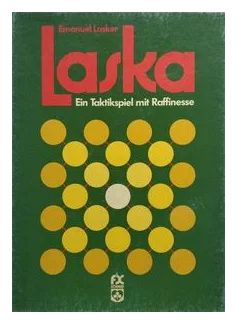
Laska box art
Rich game profile

Laska

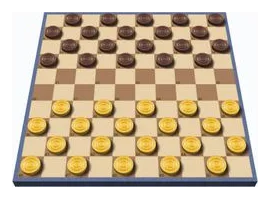
World Chess Champion Emanuel Lasker developed Laska (a.k.a. Lasca), a variant of the Checkers Family, in 1911. The game board and play resembles that of Checkers, but captured pieces remain on the board and can possibly be freed later in the game. Each player starts the game on t...

Players

2

Time

?-?

Age

?+

Weight

2.57

Rating

6.52

Should this hit the table?

Quick read before the metadata.

Laska has a high level of direct confrontation with battles and blocking moves. It also offers strategic depth through resource denial and positioning. Players need to pay attention to others' actions frequently. However, there is less emphasis on cooperation in the game.

Teach 2.3

Teaching signal

Replay 3.8

High replayability

Interaction 3.7

Highly interactive

Scaling 3.5

Scales well

Strategy 4.5

Deep strategy

Control 3.8

More strategic control

Table feel

Laska has a high level of direct confrontation with battles and blocking moves. It also offers strategic depth through resource denial and positioning. Players need to pay attention to others' actions frequently. However, there is less emphasis on cooperation in the game.

Replay value

Laska has a high replayability score due to its variability gameboard, strategic depth, and scalability. The game offers different experiences each time it is played, with multiple paths to victory and variable setups. The presence of expansions adds new content and gameplay elements, enhancing the replay value. Players have room to improve their strategy over time, discovering new tactics and strategies. The game adapts well to different player counts without compromising its appeal or balance. While it may not be the easiest game to learn, it offers enough depth to keep players engaged and coming back for more.

Luck profile

Laska has a moderate level of luck involved in the game. Random elements have minimal impact, and players have substantial ability to mitigate randomness through strategic decisions and planning. The game outcome is primarily determined by player strategy and decisions, with luck playing a minor role.

Overview

What ABG knows about this game

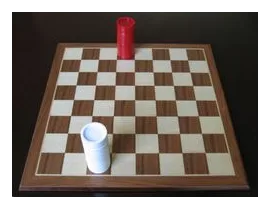
World Chess Champion Emanuel Lasker developed Laska (a.k.a. Lasca), a variant of the Checkers Family, in 1911. The game board and play resembles that of Checkers, but captured pieces remain on the board and can possibly be freed later in the game. Each player starts the game on the 7x7 board with eleven soldiers. On a turn, a player moves one soldier diagonally forward one space. If a capture is available, then the player must make that capture, trapping the captured piece underneath the capturing one; if the newly captured piece had previously had one or more pieces underneath it, then those pieces are now free to move in future turns. If a soldier reaches the opponent's back row, it's flipped and promoted to an officer, which can move diagonally in all directions. The game continues until either a player can't move or a player has no pieces remaining on the board. In both cases, this player loses the game. Laska was influenced by Bashni.
Media

Images and visual references

Images, galleries, and videos are grouped here so the page feels visual before every asset is fully hosted.

No media imported yet.

Editions

Versions and regional releases

Edition Year Language Publisher / Region
No editions imported yet.

Files and documents

Rules, aids, translations

No files imported yet.

Commerce mapping

Buying signals

No commerce mappings imported yet.

Credits

People and publishers

Designers

1
Emanuel Lasker

Artists

1
Néstor Romeral Andrés

Publishers

4
(Public Domain) Block House Inc F.X. Schmid Fratelli Fabbri Editori (Fabbri Editore)

Linked items

Graph expansion queue

Related games and expansions help build a connected catalog around every title.

No linked items imported yet.