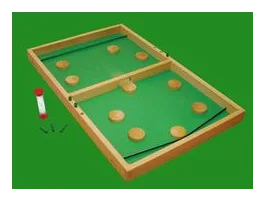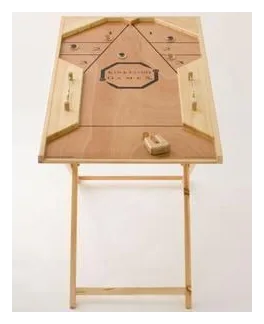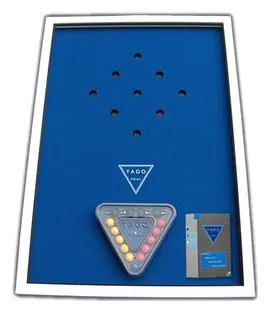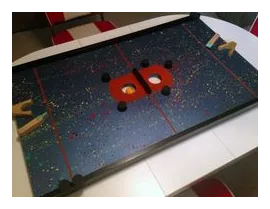
Table feel
Kippit has a high level of direct confrontation and strategic depth in confrontation. Players need to frequently pay attention to and react to each other's strategies and turns. However, the game does not emphasize cooperation as much.
Players
2
Time
?-?
Age
5+
Weight
1
Rating
5.96
Teaching signal
High replayability
Highly interactive
Scales well
Deep strategy
Luck-sensitive
Kippit has a high level of direct confrontation and strategic depth in confrontation. Players need to frequently pay attention to and react to each other's strategies and turns. However, the game does not emphasize cooperation as much.
Kippit offers a high level of variability with its gameboard, allowing for different experiences each time it is played. The presence of expansions adds to the replay value, providing new content and gameplay elements. The game also offers deep strategic possibilities, allowing players to improve their strategy over time. The player interaction score is average, and the game scales well with different numbers of players. While it may not be the easiest game to learn, it offers enough depth to keep players engaged. Overall, Kippit has a strong replayability score of 7.9.
Kippit has a moderate level of luck involved. Random elements have a notable but not exclusive impact on the game outcome. While players have some ability to mitigate randomness through strategic decisions and planning, luck still plays a significant role in determining the game's outcome.
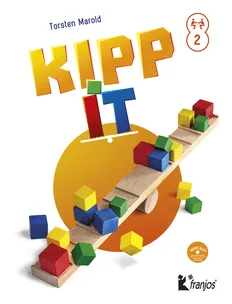
A game of balance. Players place wooden blocks on a wooden seesaw trying to get it to tip. Each player starts with 22 wooden blocks and tries to become the first player to get rid of all their blocks. The blocks come in 4 different sizes (each size is a different color). On your turn, you place blocks in a single stack on the high side of the seesaw. You have to keep placing blocks until either the seesaw tips or the stack you are building collapses. If you tip the seesaw and then blocks fall off, those blocks are given to your opponent. However, if the stack collapses before the seesaw tips, then you get stuck with any blocks that fall onto the table. In either case, any blocks that stay on the seesaw are left there to complicate future turns. Steady hands and a little knowledge of physics helps.
| Edition | Year | Language | Publisher / Region |
|---|---|---|---|
| No editions imported yet. | |||
No files imported yet.
No linked items imported yet.