Overview
At a glance
Is this game right for my group?
ABG editorial scores on a 1–5 scale.
Harder to teach
High replayability
Highly interactive
Scales well
Deep strategy
How it plays
How does it play?
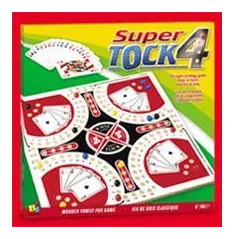
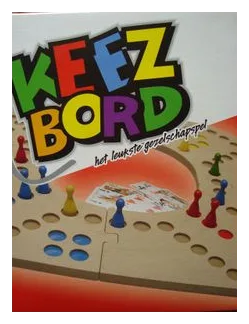
This partnership game is played in 2 or 3 pairs. (A simple 2-player version also exists as Keezbord Duo.) The aim of the game is to be the first pair to get all their pawns in their homes, just like Ludo and Pachisi.
Core mechanisms
Key systems that shape the decisions players make.
Read the full game description
This partnership game is played in 2 or 3 pairs. (A simple 2-player version also exists as Keezbord Duo.) The aim of the game is to be the first pair to get all their pawns in their homes, just like Ludo and Pachisi. Instead of dice you play with playingcards. The first round everyone gets 5 playing cards. The second and third rounds everyone gets 4 cards. At the end of the third round all the cards are shuffled and then the second three rounds begin, until one pair has won the game. If you don’t have a King or Ace in your hand, the very first round, you must put your 5 cards aside and take 5 new ones. Repeat this until you have at least one of those cards. When it’s your turn you play a card in the middle and do what you have to do. To set a pawn on the starting position (the colored point in the color of your pawns) you have to put down a King or Ace. If you can play a card you have to do so, even if it’s bad for you or your partner. If you can’t play a card anymore you put down all your remaining cards in the middle. Your turns are over in this round. If everyone has put down all of their cards, this round is over and another round can begin. These are the actions: Ace: put a pawn (yours or your partner’s) on your starting space or a pawn 1 place ahead. King: put a pawn (yours or your partner’s) on your (or your partner’s) starting space. Queen: move a pawn (yours or your partner’s) 12 spaces forward. Jack: swap a pawn (yours or your partner’s) with one of the other players’ pawn. Seven: move 1 or 2 pawns (yours or your partner’s) a total of seven spaces forward. Four: a pawn has to move 4 spaces backwards. When a pawn is standing on its own colored space, this pawn may not be beaten, nor swapped with a Jack, nor be overtaken. With any other card you have to go forward spaces as shown on the card. During the whole game you can beat other pawns if you land on them. The beaten pawn has to go back to its place at the beginning of the game. With 4 players you play with 1 deck of cards. With 6 players you play with 1.5 decks of cards. _ Shares many similarities with DOG and Partners.