Overview
At a glance
Is this game right for my group?
ABG editorial scores on a 1–5 scale.
Harder to teach
High replayability
Highly interactive
Scales well
Deep strategy
How it plays
How does it play?
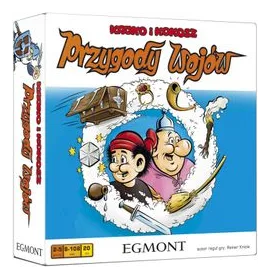
Kajko i Kokosz: Przygody Wojów is a third game in the series of Kajko and Kokosz adventures. In this game, players try to collect as many treasures as they can while they try to avoid fighting with brigands and other ruffians.
Core mechanisms
Key systems that shape the decisions players make.
Open Drafting
Select cards or items from a shared face-up display.
Push Your Luck
Choose whether to secure current gains or risk them for a larger reward.
Set Collection
Gather related items that become more valuable when scored together.
Memory
Remember previously revealed information, positions, or sequences.
Read the full game description
Kajko i Kokosz: Przygody Wojów is a third game in the series of Kajko and Kokosz adventures. In this game, players try to collect as many treasures as they can while they try to avoid fighting with brigands and other ruffians. At the beginning of the game, the 10 stacks (differed by color and number) of cards (with treasures and brigands) are formed in the middle of the table. Each player receives 2 or 3 characters. On a player's turn, they have to choose one of the following two actions: 1. Take one card from one of the stacks and place it face up in front of them. 2. Send all previously gathered cards to the castle using one of their characters. Players try to gather as many cards as they can, but the more they have, the more risk they have to lose it all. What's more, action 2 can be performed only 2 or 3 times per game (each character can be sent once). The players also try to remember in which stack the bad cards were taken, because every stack contains the same set of cards. The game ends when all of the players have sent all their characters or when nobody has anything more to send and there are no cards to draw. Players now count up their treasure cards. The player with the highest score is the winner. There is also an advanced variant which players can choose to play with: It includes the 10 bonus point card, which is given at the end of the game to the player who gathered the most coins amongst their treasures. Also, when a player draws the appropriate card, they have to give it to another player, and then steal all the coins from that chosen player.