Table feel
Hotel Amsterdam has a moderate level of direct confrontation and strategic depth in confrontation. Players need to pay attention to each other's strategies and turns frequently. However, the game does not emphasize cooperation as much.
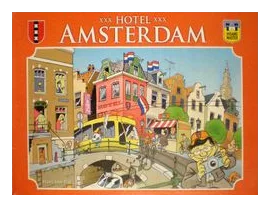
This combination of a tile turning and occupation game is set in the touristic corners of the city of Amsterdam. In the basic game, players roll the dice to move the canal boat in order to bring tourists into the city. The same dice also allow you to move the mayor and the night...
Players
2-4
Time
?-?
Age
8+
Weight
1.73
Rating
5.82
Should this hit the table?
Hotel Amsterdam has a moderate level of direct confrontation and strategic depth in confrontation. Players need to pay attention to each other's strategies and turns frequently. However, the game does not emphasize cooperation as much.
Teaching signal
High replayability
Highly interactive
Scales well
Deep strategy
Luck-sensitive
Hotel Amsterdam has a moderate level of direct confrontation and strategic depth in confrontation. Players need to pay attention to each other's strategies and turns frequently. However, the game does not emphasize cooperation as much.
Hotel Amsterdam has a high variability gameboard, offering different experiences each time it is played. The presence of expansions adds new content and gameplay elements, enhancing replay value. The game provides deep strategic possibilities and room for improvement over time. Player interaction is moderate. The game scales well with different numbers of players without compromising its appeal or balance. It has a moderate easiness to learn score, allowing players to grasp the rules and depth of the game within a reasonable time. Overall, Hotel Amsterdam has a good replayability score of 7.9, indicating its ability to provide fresh and engaging experiences over multiple playthroughs.
The final luck score for Hotel Amsterdam is 5.67. The game has a moderate level of randomness impact, where random elements have a notable but not exclusive impact on the game outcome. Players have a substantial ability to mitigate randomness through strategic decisions and planning, indicating a good level of strategic mitigation. The overall luck dependence is balanced, with a mix of luck and strategy influencing the game outcome. While luck does play a significant role, player strategy and decisions also have a considerable influence. Overall, Hotel Amsterdam falls within the range of games like Catan and Monopoly, where luck plays a moderate role in determining the outcome.
Overview
This combination of a tile turning and occupation game is set in the touristic corners of the city of Amsterdam. In the basic game, players roll the dice to move the canal boat in order to bring tourists into the city. The same dice also allow you to move the mayor and the night guard that open and close the different tourist attractions, thereby moving the tourists to another location of the same type. The goal of the game is to move the tourists towards your own hotels on the game board. The game comes with a tactical variant, which disables the luck element by eliminating dice rolling.
Media
Images, galleries, and videos are grouped here so the page feels visual before every asset is fully hosted.
No media imported yet.
Editions
| Edition | Year | Language | Publisher / Region |
|---|---|---|---|
| No editions imported yet. | |||
Files and documents
No files imported yet.
Commerce mapping
No commerce mappings imported yet.
Credits
Linked items
Related games and expansions help build a connected catalog around every title.
No linked items imported yet.