Table feel
Moderate level of direct and strategic confrontation with high interaction frequency, but low emphasis on cooperation.
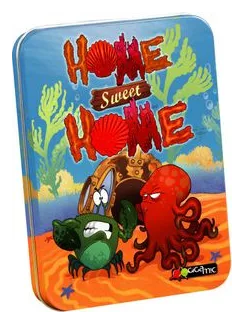
In Home Sweet Home, players have five diving bells and want to get as many sea creatures into them as possible – but crabs don't like octopi and vice versa, so keep those two species separate if you don't want trouble. To set up the game, each player lays out diving bell cards in...
Players
2-4
Time
?-?
Age
8+
Weight
1.43
Rating
6.14
Should this hit the table?
Moderate level of direct and strategic confrontation with high interaction frequency, but low emphasis on cooperation.
Teaching signal
High replayability
Highly interactive
Scales well
Deep strategy
Luck-sensitive
Moderate level of direct and strategic confrontation with high interaction frequency, but low emphasis on cooperation.
Home Sweet Home offers a high degree of variability with its gameboard, allowing for different experiences each time it is played. The presence of expansions adds new content and gameplay elements, enhancing replay value. The game also provides deep strategic possibilities and room for players to improve their tactics and strategies over time. The player interaction score is moderate, and the game scales well with different numbers of players. While it may take some time to learn, the easiness to learn score is still within a reasonable range. Overall, Home Sweet Home has a strong replayability score of 7.85.
The final luck score for Home Sweet Home is 5.67, indicating a balanced mix of luck and strategy. Random elements have a notable but not exclusive impact on the game outcome, and players have substantial ability to mitigate randomness through strategic decisions and planning. The game outcome is primarily determined by player strategy and decisions, with luck playing a minor role.
Overview
In Home Sweet Home, players have five diving bells and want to get as many sea creatures into them as possible – but crabs don't like octopi and vice versa, so keep those two species separate if you don't want trouble. To set up the game, each player lays out diving bell cards in front of them, numbered 1-5, and receives four cards from the shuffled animal deck; crab and octopus cards are also numbered 1-5. At the start of a round, a player lays an animal card from her hand in the center of the table and states the sum of all cards played. The next player does the same, making sure that all animal cards are visible. This continues until the sum of the animals played totals twelve or more. The player who laid the last card takes the stack, then places the animals in her diving bells based on the number on the cards. If you would lay a crab in a diving bell that already holds one or more octopi cards (and vice versa), you must discard one card of each type. Once the deck rounds out, players finish the round, if possible, then sum the animals in their diving bells. The player with the highest total wins!
Media
Images, galleries, and videos are grouped here so the page feels visual before every asset is fully hosted.
No media imported yet.
Editions
| Edition | Year | Language | Publisher / Region |
|---|---|---|---|
| No editions imported yet. | |||
Files and documents
No files imported yet.
Commerce mapping
No commerce mappings imported yet.
Credits
Linked items
Related games and expansions help build a connected catalog around every title.
No linked items imported yet.