Overview
At a glance
Is this game right for my group?
ABG editorial scores on a 1–5 scale.
Harder to teach
High replayability
Highly interactive
Scales well
Deep strategy
More strategic control
How it plays
How does it play?
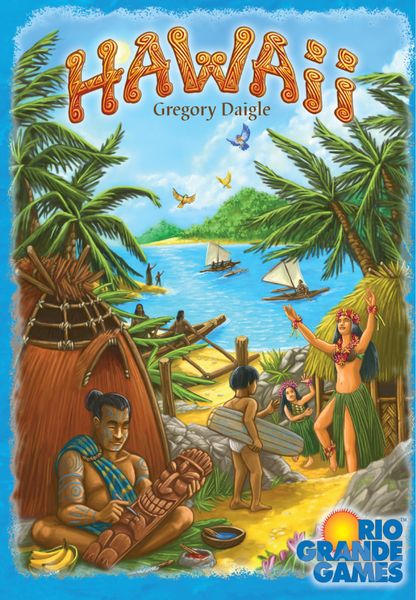
Guide a chieftain around a modular island, spend increasingly scarce feet, shells, and fruit, and assemble a village whose tiles score together.
Core mechanisms
Key systems that shape the decisions players make.
Action Points
Spend a limited allowance of points across several possible actions each turn.
Tile Placement
Place tiles to build a shared or personal spatial arrangement.
Worker Placement
Commit limited workers to action spaces before opponents occupy them.
Area Movement
Move pieces between connected regions rather than along individual spaces.
Income
Receive recurring resources according to your position, assets, or development.
Modular Board
Build the play area from interchangeable sections that vary between games.
Read the full game description
Hawaii is a five-round strategy game about exploring the main island and developing the most prosperous personal village. Each chieftain spends foot tokens to move among randomly arranged locations, then pays the printed price to take boats, farms, hula dancers, surfers, kahunas, irrigation, gods, or other village tiles. Buying the reverse side costs double but usually strengthens the tile. Shells pay for island purchases, fruit can substitute for feet or shells, and rounds steadily tighten as income falls while minimum spending requirements rise. Boats open voyages to surrounding islands, and village rows must be shaped so their people, fields, irrigation, and scoring tiles support one another. Multiple endgame goals make every island layout a fresh route-planning puzzle.