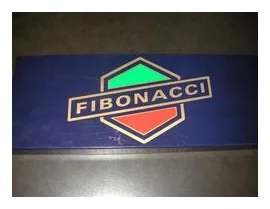
Table feel
Fibonacci has a moderate level of direct confrontation and strategic depth in confrontation. Players need to pay attention to each other's strategies frequently. However, there is less emphasis on cooperation in the game.
This abstract strategy doesn't really use the Fibonacci sequence (1,1,2,3,5,8,13...), but it's pretty cool nonetheless. The first player starts off with one move, the second player takes two, first player takes three, and so on up to a maximum of six moves. The object of the game...
Players
2
Time
?-?
Age
?+
Weight
1.83
Rating
6.25
Should this hit the table?
Fibonacci has a moderate level of direct confrontation and strategic depth in confrontation. Players need to pay attention to each other's strategies frequently. However, there is less emphasis on cooperation in the game.
Teaching signal
High replayability
Highly interactive
Scales well
Deep strategy
More strategic control
Fibonacci has a moderate level of direct confrontation and strategic depth in confrontation. Players need to pay attention to each other's strategies frequently. However, there is less emphasis on cooperation in the game.
Fibonacci has a high variability gameboard, offering fresh experiences each time it is played. The presence of expansions adds new content and gameplay elements, enhancing replay value. The game provides deep strategic possibilities and room for improvement over time. Player interaction is moderate. It scales well with different numbers of players without compromising its appeal or balance. The game is moderately easy to learn, striking a balance between accessibility and depth. Overall, Fibonacci has a strong replayability score of 7.96.
Fibonacci has a moderate level of randomness impact, with random elements having a notable but not exclusive impact on the game outcome. However, players have substantial ability to mitigate randomness through strategic decisions and planning. The game outcome is primarily determined by player strategy and decisions, with luck playing a minor role.
Overview
This abstract strategy doesn't really use the Fibonacci sequence (1,1,2,3,5,8,13...), but it's pretty cool nonetheless. The first player starts off with one move, the second player takes two, first player takes three, and so on up to a maximum of six moves. The object of the game is to surround your opponent's base with your six strike pieces. Everytime you get a strike piece adjacent to your opponent's base they lose 1 move point.
Media
Images, galleries, and videos are grouped here so the page feels visual before every asset is fully hosted.
No media imported yet.
Editions
| Edition | Year | Language | Publisher / Region |
|---|---|---|---|
| No editions imported yet. | |||
Files and documents
No files imported yet.
Commerce mapping
No commerce mappings imported yet.
Credits
Linked items
Related games and expansions help build a connected catalog around every title.
No linked items imported yet.