Overview
At a glance
Is this game right for my group?
ABG editorial scores on a 1–5 scale.
Harder to teach
High replayability
Highly interactive
Scales well
Deep strategy
How it plays
How does it play?
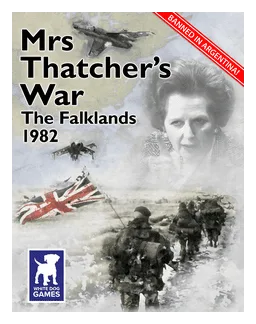
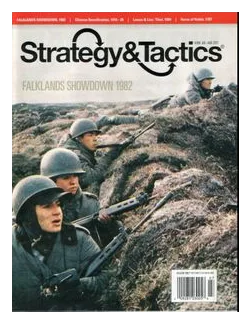
Falklands Showdown: The 1982 Anglo-Argentine War, designed by Philip Sharp, is an intermediate complexity two-player strategic and operational wargame of the conflict that took place between Argentina and the United Kingdom in 1982.
Core mechanisms
Key systems that shape the decisions players make.
Read the full game description
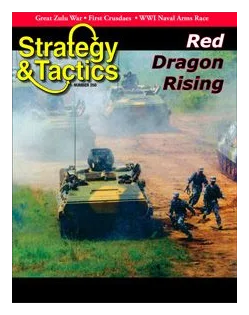
Falklands Showdown: The 1982 Anglo-Argentine War, designed by Philip Sharp, is an intermediate complexity two-player strategic and operational wargame of the conflict that took place between Argentina and the United Kingdom in 1982. It begins with Argentina in control of the Falkland Islands and UK forces approaching to try to retake them. Aircraft counters represent four aircraft of one particular type. Ground-unit counters represent infantry battalions (500 to 600 men), artillery battalions (12 to 18 guns with crews), armored reconnaissance squadrons (eight to 12 vehicles and their crews), a heavy machinegun company (120 men with heavy machineguns), and special forces teams (25 to 50 men). Ship and submarine counters each represent one vessel. Each turn represents between one to three days, depending on the current operational tempo. Each inch on the Tactical Area Map equals five miles. Each inch on the Strategic Sea Area Map equals 100 miles. The game uses an adaptation of the system originally created for our Red Dragon Rising game. Special rules cover such things as: Operation Black Buck, decisive leadership, Exocet missiles, stealth aircraft, reinforcements, off-map areas, naval transport, airbase limits, submarine operations, strategic airlift, rebasing, ship repair, special forces raids, the Total Exclusion Zone, aerial interception, cross-decking, naval surface actions, ground assault, heliborne movement, the Argentine mainland, protected targets, entrenchments, mountain combat, severe weather, and much more. The turn sequence is as follows. I. UK Operations Phase II. AR Operations Phase III. UK Submarine Phase IV. AR Submarine Phase V. Random Event Phase