Overview
At a glance
Is this game right for my group?
ABG editorial scores on a 1–5 scale.
Easier to teach
High replayability
Highly interactive
Scales well
Light strategy
More strategic control
How it plays
How does it play?
Build a shared Japanese landscape one hex at a time, complete resident tasks, and unlock more than forty achievements hidden across six campaign boxes.
Core mechanisms
Key systems that shape the decisions players make.
Cooperative Game
Players coordinate their actions toward a shared objective and win or lose together.
Tile Placement
Place tiles to build a shared or personal spatial arrangement.
Scenario Campaign
Play linked or standalone scenarios with their own setup, objectives, and consequences.
Map Addition
Expand the playable map by adding new tiles, regions, or spaces.
Modular Board
Build the play area from interchangeable sections that vary between games.
Hexagon Grid
Use a hexagonal map where each space connects evenly in six directions.
Read the full game description
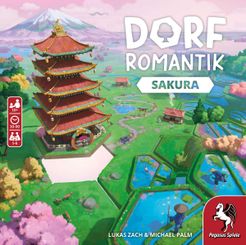
Dorfromantik: Sakura is a standalone cooperative landscape puzzle set among cherry groves, rice fields, villages, roads, and rivers. Players reveal and place one hexagonal tile at a time, discussing the best position while keeping the whole map connected. Task tiles ask for territories or routes of exact sizes; completed markers, enclosed flags, and long roads and rivers produce the group score. That result advances a campaign sheet and unlocks more than forty achievements from six sealed boxes, gradually adding components and fresh scoring ideas without destroying anything. Sakura keeps the relaxing foundation of Dorfromantik while giving experienced groups a more demanding path to master.