Table feel
Moderate interaction with a good balance between direct and strategic confrontation. Players need to pay attention to each other's actions frequently, but there is limited emphasis on cooperation.
Players
1-4
Time
30-120
Age
14+
Weight
3.69
Rating
8.17
Teaching signal
High replayability
Highly interactive
Scales well
Deep strategy
Luck-sensitive
Moderate interaction with a good balance between direct and strategic confrontation. Players need to pay attention to each other's actions frequently, but there is limited emphasis on cooperation.
Doggerland has a high replayability score due to its variability in gameplay, strategic depth, and adaptability to different player counts. The game offers different experiences each time it is played, with expansions available to add new content and gameplay elements. Players can continuously improve their strategy over time, and the game scales well with different numbers of players. While it may not be the easiest game to learn, it offers enough depth to keep players engaged and coming back for more.
Doggerland has a moderate influence of luck. Random elements have a notable but not exclusive impact on the game outcome. Players have substantial ability to mitigate randomness through strategic decisions and planning. The game outcome is primarily determined by player strategy and decisions, with luck playing a minor role.
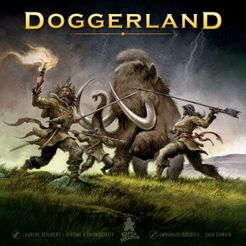
Doggerland was a landmass that connected Great Britain to mainland Europe that disappeared under the North Sea after the last ice age. Humans lived on these fertile lands where multiple resources and animals were found. In Doggerland, you embody a clan around 15,000 BCE, and your goal is to expand your clan in order to leave a trace of its existence for centuries to come. Players have to increase their population, make crafts, paint murals in caves, raise megaliths for the gods, and (most of all) survive the rigors of the seasons. To do this, they have to explore the surrounding territory and adapt to the resources at their disposal. This territory differs in each game thanks to modular tiles. Each round, players have to program their actions, then carry them out. The actions will vary based on available resources, their abundance or scarcity around their village, and also based on the actions and reactions of what other players have chosen. As time passes, resources will run out, and clans must migrate to find what they need for their development and survival. In each clan, players have a leader who brings multiple bonuses and a shaman who allows powerful and unique actions thanks to her knowledge and magic. After 6-8 seasons, the clan with the most points wins.
| Edition | Year | Language | Publisher / Region |
|---|---|---|---|
| No editions imported yet. | |||
No files imported yet.
No commerce mappings imported yet.
No linked items imported yet.