Overview
At a glance
Is this game right for my group?
ABG editorial scores on a 1–5 scale.
Harder to teach
High replayability
Highly interactive
Scales well
Deep strategy
How it plays
How does it play?
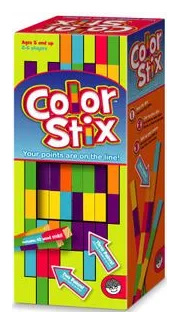
Qwirkle designer Susan McKinley Ross offers a new take on pick-up sticks, one that might be called "pick up the sticks, then put them down again in a pleasing arrangement" but is thankfully better titled Color Stix.
Core mechanisms
Key systems that shape the decisions players make.
Read the full game description
Qwirkle designer Susan McKinley Ross offers a new take on pick-up sticks, one that might be called "pick up the sticks, then put them down again in a pleasing arrangement" but is thankfully better titled Color Stix. Color Stix includes 42 brightly-colored sticks – with seven colored rectangles on each stick – along with a 90-second timer. In the first round of the game, each player takes 7-10 sticks, holds them together in one hand, then drops them on the table once the timer starts. Players then arrange and rearrange the sticks to place similarly colored rectangles adjacent to one another and form large blocks of a single color. Once time runs out, players score points for each color block of at least two rectangles, with each block worth as many points as the number of rectangles in it. Players then pass their sticks clockwise and play another round. After as many rounds as the number of players in the game, the player with the highest score wins.