Overview
At a glance
Is this game right for my group?
ABG editorial scores on a 1–5 scale.
Harder to teach
High replayability
Highly interactive
Scales well
Deep strategy
How it plays
How does it play?
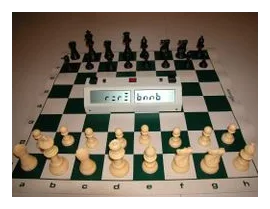
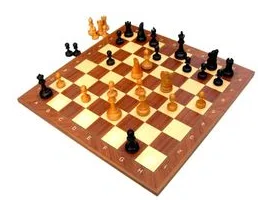
Chess is a two-player, abstract strategy board game that represents medieval warfare on an 8x8 board with alternating light and dark squares. Opposing pieces, traditionally designated White and Black, are initially lined up on either side.
Core mechanisms
Key systems that shape the decisions players make.
Grid Movement
Move pieces between adjacent spaces on a regular grid.
Once-Per-Game Abilities
Each powerful ability may be used only once during the entire game.
Pattern Movement
Pieces move according to defined geometric patterns.
Static Capture
Capture opposing pieces through fixed positional relationships.
Square Grid
Use an orthogonal grid where position and adjacent spaces shape movement or placement.
Sudden Death Ending
End the game when a specific timing or state condition is reached.
Read the full game description
Chess is a two-player, abstract strategy board game that represents medieval warfare on an 8x8 board with alternating light and dark squares. Opposing pieces, traditionally designated White and Black, are initially lined up on either side. Each type of piece has a unique form of movement and capturing occurs when a piece, via its movement, occupies the square of an opposing piece. Players take turns moving one of their pieces in an attempt to capture, attack, defend, or develop their positions. Chess games can end in checkmate, resignation, or one of several types of draws. Chess is one of the most popular games in the world, played by millions of people worldwide at home, in clubs, online, by correspondence, and in tournaments. Between two highly skilled players, chess can be a beautiful thing to watch, and a game can provide great entertainment even for novices. There is also a large literature of books and periodicals about chess, typically featuring games and commentary by chess masters. The game has its origins in the Indian game Chaturanga, and became Shatranj when introduced to the Persians. The current form of the game emerged in the second half of the 15th century when the Persians brought Shatranj to Southern Europe. The tradition of organized competitive chess began in the 16th century. The first official World Chess Champion, Wilhelm Steinitz, claimed his title in 1886. The current World Champion is Ding Liren, China. Chess is also a recognized sport of the International Olympic Committee.