Overview
At a glance
Is this game right for my group?
ABG editorial scores on a 1–5 scale.
Harder to teach
High replayability
Highly interactive
Scales well
Deep strategy
How it plays
How does it play?
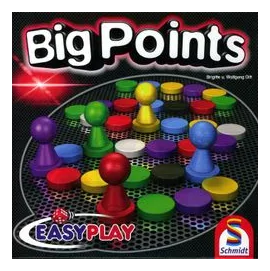
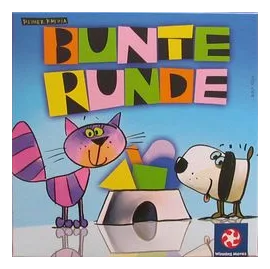
Bunte Runde is an abstract game for both adults and children. Depending on the age of the players, players decide if they play with the 36 wooden pieces, or with the 25 picture tiles.
Core mechanisms
Key systems that shape the decisions players make.
Read the full game description
Bunte Runde is an abstract game for both adults and children. Depending on the age of the players, players decide if they play with the 36 wooden pieces, or with the 25 picture tiles. The other pieces are not needed in either case. The 36 wooden pieces or 25 picture tiles are mixed up and laid out in a circle. The game figure is placed on any of the wooden pieces or picture tiles. The 36 (or 25, respectively) small gold coins, and the large gold coin are placed in the center of the circle. On a player’s turn, he or she moves the game figure forward either one, two, or three places clockwise along the circle. The player then takes the wooden piece that the game figure is standing over and places the piece in front of themselves so that it is visible to all players. The game figure remains in the empty space. When a player takes the last piece of a color (ie. yellow) or the last of a shape (ie. triangle), the game is interrupted and scoring takes place. Every player who has a piece of this color or shape in front of them receives a small gold coin for each of these pieces. When playing with the picture tiles, scoring is based on the colors or animals (with only 5 gold coins). If the taken piece is the last one of a color and shape, there is a double scoring: 6 (or 5) small coins for the appropriate color and 6 (or 5) for the appropriate shape (or animal) are distributed. The game ends once all 36 (or 25) small coins are distributed. The player with most coins wins. The game is an adaptation of "Wheel of History" from New Games in Old Rome. Marketed for children, but has variants for adults as well. It has nice-looking components (wooden pieces of different colors and shapes).