ABG All Board Games
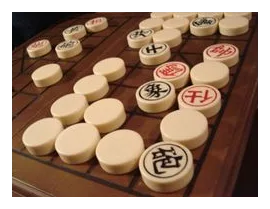
Banqi box art
Rich game profile

Banqi

Banqi, or Half Chess, is a two-player Chinese board game played on a 4x8 grid (usually half of the Chinese Chess board). Banqi is a social game, usually played for fun rather than serious competition. Because it has a significant element of chance, some people consider it a child...

Players

2

Time

?-?

Age

10+

Weight

1.57

Rating

6.04

Should this hit the table?

Quick read before the metadata.

Banqi has a high level of direct confrontation and strategic depth, with frequent interaction between players. However, it does not require much cooperation.

Teach 2.3

Teaching signal

Replay 3.9

High replayability

Interaction 3.6

Highly interactive

Scaling 4.0

Scales well

Strategy 4.5

Deep strategy

Control 3.5

More strategic control

Table feel

Banqi has a high level of direct confrontation and strategic depth, with frequent interaction between players. However, it does not require much cooperation.

Replay value

Banqi offers a high level of variability with its gameboard and strategic depth. The presence of expansions adds to the replay value. The game scales well with different player counts and has a moderate learning curve. Overall, it provides a solid replayability experience with a score of 7.7.

Luck profile

Banqi has a moderate influence of luck. Random elements, such as the initial setup of the game and the order of play, can have an impact on the outcome. However, players have a significant ability to mitigate luck through strategic decisions and planning. The game relies on a balanced mix of luck and strategy, with player decisions playing a major role in determining the outcome.

Overview

What ABG knows about this game

Banqi, or Half Chess, is a two-player Chinese board game played on a 4x8 grid (usually half of the Chinese Chess board). Banqi is a social game, usually played for fun rather than serious competition. Because it has a significant element of chance, some people consider it a child's game, but Banqi often has remarkable depth of strategy. The 32 pieces are shuffled and randomly allocated face-down to squares on the board. The first player turns up a piece to begin the game. The color of the piece he turns up is the color he will play in the game. The second player then makes a move, and the two alternate until the game is finished. The game ends when a player cannot move; the player who cannot move loses. Most often, the game is lost because all of a player’s pieces have been captured and so he has no pieces to move. However, it is possible for one player to surround all of the other player’s pieces in a manner that makes it impossible for them to move.
Media

Images and visual references

Images, galleries, and videos are grouped here so the page feels visual before every asset is fully hosted.

No media imported yet.

Editions

Versions and regional releases

Edition Year Language Publisher / Region
No editions imported yet.

Files and documents

Rules, aids, translations

No files imported yet.

Commerce mapping

Buying signals

No commerce mappings imported yet.

Credits

People and publishers

Linked items

Graph expansion queue

Related games and expansions help build a connected catalog around every title.

No linked items imported yet.