ABG All Board Games
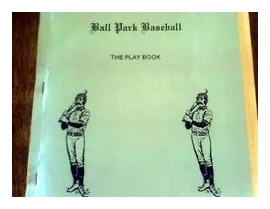
Ball Park Baseball box art
Rich game profile

Ball Park Baseball

Ball Park Baseball was developed by Professor Charles Sidman from the University of Kansas in the early 1960s. Each team from 1894 up to the present (2006 season) is available and includes every pitcher with 29.3 IP or hitter/position player with a significant contribution to the...

Players

1-2

Time

?-?

Age

?+

Weight

3.22

Rating

7.63

Should this hit the table?

Quick read before the metadata.

Ball Park Baseball has a moderate level of direct confrontation and strategic depth. Players frequently need to be aware of and react to others' strategies and turns. While there is some level of cooperation required, it is not a major emphasis in the game. Overall, the game offers a good level of player interaction.

Teach 2.3

Teaching signal

Replay 4.0

High replayability

Interaction 3.7

Highly interactive

Scaling 4.0

Scales well

Strategy 4.5

Deep strategy

Control 3.5

More strategic control

Table feel

Ball Park Baseball has a moderate level of direct confrontation and strategic depth. Players frequently need to be aware of and react to others' strategies and turns. While there is some level of cooperation required, it is not a major emphasis in the game. Overall, the game offers a good level of player interaction.

Replay value

Ball Park Baseball has a high variability gameboard, offering different experiences each time it is played. The presence of expansions adds new content and gameplay elements, enhancing replay value. The game provides deep strategic possibilities and room for players to improve their tactics and strategies. The player interaction score is average. The game scales well with different numbers of players without compromising its appeal or balance. While it may take some time to learn, the game offers a good balance between easiness and depth. Overall, Ball Park Baseball has a solid replayability score of 7.9.

Luck profile

Ball Park Baseball has a moderate level of luck. Random elements such as dice rolls and card draws have a notable but not exclusive impact on the game outcome. However, players have substantial ability to mitigate randomness through strategic decisions and planning. The game outcome is primarily determined by player strategy and decisions, with luck playing a minor role.

Overview

What ABG knows about this game

Ball Park Baseball was developed by Professor Charles Sidman from the University of Kansas in the early 1960s. Each team from 1894 up to the present (2006 season) is available and includes every pitcher with 29.3 IP or hitter/position player with a significant contribution to the team's performance. The game is played according to the rules of baseball. The action of the game is based upon random numbers between 1 and 50. Numbers 1 through 25 determine the strength of the batter; numbers 26 through 50 provide the capability of the pitcher. Batters have ratings for arm (catchers/outfielders), fielding (by position) and running (catchers have and additional rating for handling pitchers). Pitchers have ratings for fielding and holding runners on base. The game also has very detailed (and essential to game play) unique ball park charts (capturing the dimensions and effect of each field) for several historic baseball stadiums. Each card and ball park chart is based on actual statistic performances of the players.

Media

Images and visual references

Images, galleries, and videos are grouped here so the page feels visual before every asset is fully hosted.

No media imported yet.

Editions

Versions and regional releases

Edition Year Language Publisher / Region
No editions imported yet.

Files and documents

Rules, aids, translations

No files imported yet.

Commerce mapping

Buying signals

No commerce mappings imported yet.

Credits

People and publishers

Designers

1
Prof. Charles Sidman

Publishers

1
Ball Park, Inc.

Linked items

Graph expansion queue

Related games and expansions help build a connected catalog around every title.

No linked items imported yet.