Overview
At a glance
Is this game right for my group?
ABG editorial scores on a 1–5 scale.
Harder to teach
High replayability
Highly interactive
Scales well
Deep strategy
How it plays
How does it play?
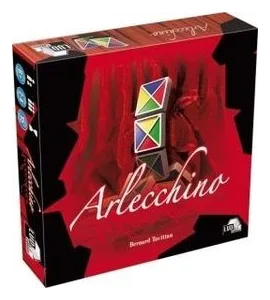
In Arlecchino, each player owns a color and wants to have the most segments of that color on the board when the game ends. To start the game, players place the tiles randomly on the board, then remove the black-and-white starter tile.
Core mechanisms
Key systems that shape the decisions players make.
Read the full game description
In Arlecchino, each player owns a color and wants to have the most segments of that color on the board when the game ends. To start the game, players place the tiles randomly on the board, then remove the black-and-white starter tile. The other tiles have some combination of the four colors in the game: four segments of yellow; three yellow and one blue; two yellow, one blue and one red; etc. On a turn, you choose a tile that contains at least one segment of your color, then move that tile one or more times, up to the number of segments of your color on that tile. You can move horizontally or vertically, and you can jump over an adjacent tile to remove it from the game. You must remove a tile on your turn or else you must pass. When all players must pass, the game ends and the player who has the most segments of his color on the remaining tiles wins. Microbadge - Arlecchino fan