Overview
At a glance
Is this game right for my group?
ABG editorial scores on a 1–5 scale.
Harder to teach
High replayability
Highly interactive
Scales well
Deep strategy
How it plays
How does it play?
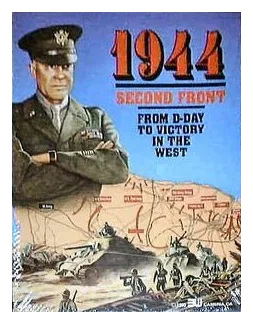
1944: SECOND FRONT begins with the Allies well established in France following the D-Day invasions. The Allies are gathered to attempt their breakout and begin the race toward the German frontier.
Core mechanisms
Key systems that shape the decisions players make.
Read the full game description
1944: SECOND FRONT begins with the Allies well established in France following the D-Day invasions. The Allies are gathered to attempt their breakout and begin the race toward the German frontier. Each player has Combat Units and Headquarters available, and is capable of maneuvering across the map and engaging enemy pieces in combat. You must master the deceptively concise rules for Activation and Movement Point expenditure. And at any given time, you will face the decision of which army to Activate in any one phase - and your opponent will have an immediate opportunity to react . The most interesting aspect of the game is that it seriously tries to model time over the course of the player's turn. You activate HQs, which can then control a varying number of infantry or armor units, depending on nationality. There is a track display that you use during movement/combat. As you make decisions about which actions to take, you branch along the track, limiting your options about what you can do next. Essentially this captures the passage of time required for certain actions. It's easier to play than it is to describe. For example, suppose you have an armor division near the enemy and a couple of infantry divisions further away. If you move up the infantry to attack and make a breakthrough, the armored unit will probably not be able to move very far through the breach. In effect, the armored unit has spent most of the turn waiting around for the infantry to get in position and make its attack. The game puts emphasis on elite units on both sides and on the brittleness of the powerful British formations (no replacements). Chrome rules cover Market-Garden and the Bulge. Contents One 32 page rule book One full color map 400 die cut counters Five chart sheets One 10-sided die One plastic tray Players: two or more Playing Time: 3 to 15 hours Complexity: medium to high Solitaire Suitability: medium